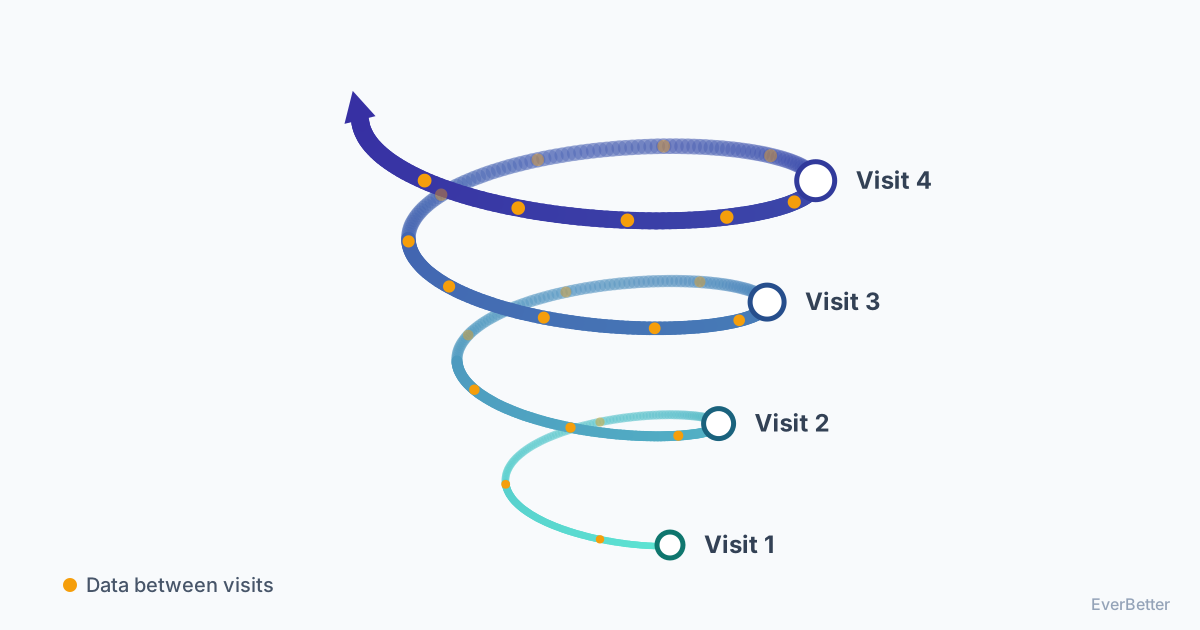
Maria walks into the clinic at 9:58 for a 10:00 visit. She consented to share her sleep patterns and diet choices with her clinic through the MED app, so her nurse is ready to talk about last week’s sleep. Her physician opens Maria’s notes and finds her health data waiting: every reading since the last visit.
Maria filled out nothing. The EverBetter MED app captured her health between visits, and her care team walked into the room already knowing her. When she leaves, the plan will be on her phone before she reaches her car.
That is continuity of care: Maria and her care team manage her health together, between visits and during them [1].
Here is what most scribe vendors get wrong: they see the note as the product. We see the human encounter as the product. An encounter is a workflow that touches the clinician, the nurse, the front desk, checkout, orders, and the patient. A scribe that writes a single note for a single clinician automates the smallest part of that workflow.
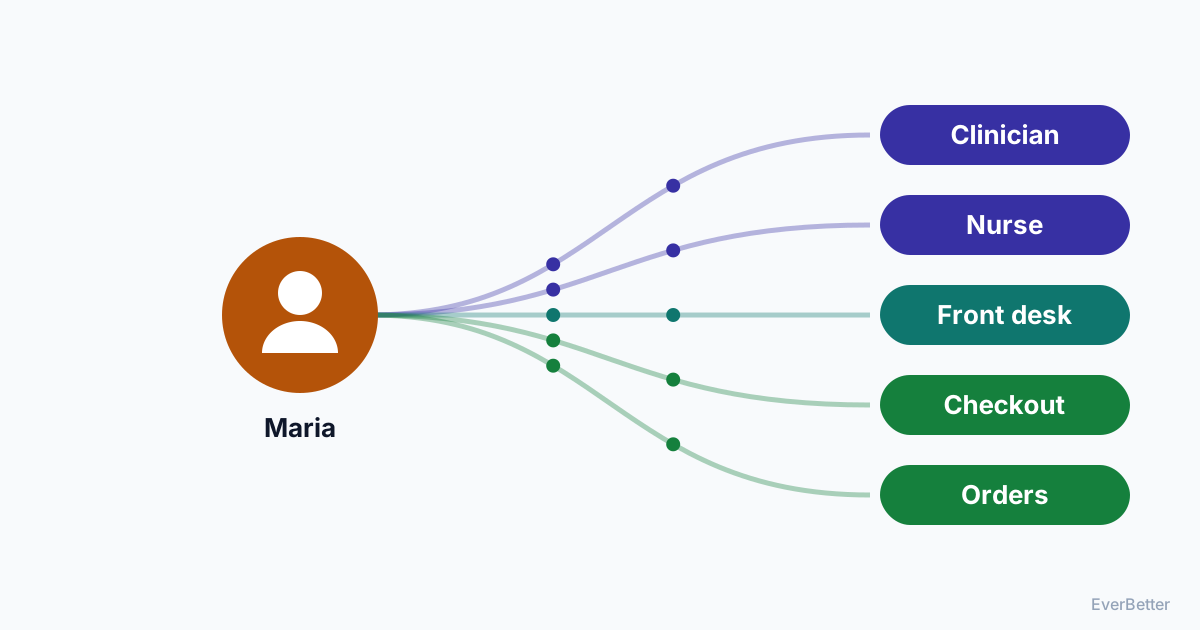
Consider the clinic down the street. At 9:40 p.m., its physician sits at her kitchen table closing charts. Her ambient AI scribe, software that listens to the visit and drafts the clinical note, wrote every note. She still spends the evening reconciling orders, rewriting care plans, and messaging her front desk about follow-ups. The industry solved her typing. Her work remains.
The market has reached the same ceiling. Epic released native AI Charting in February 2026, which bundles ambient documentation into the EHR itself [2]. When the platform absorbs the note, the note stops being a product. The value moves to everything around it.
At EverBetter, we built the scribe around the encounter. It starts before the visit. The MED app captures the patient’s health data, including wearables, between visits. That data shapes a pre-visit note for each role: the clinician gets patient-specific preparation, the nurse gets intake priorities, and the front desk gets what must be ready at check-in.
During the visit, 35 protocols run against the transcript. Each protocol is bespoke to the clinician, the patient, and the date of the encounter. A protocol tuned for a functional medicine physician at a six-month follow-up extracts different facts than one tuned for a new-patient intake. Generic extraction produces generic notes. We chose specificity.
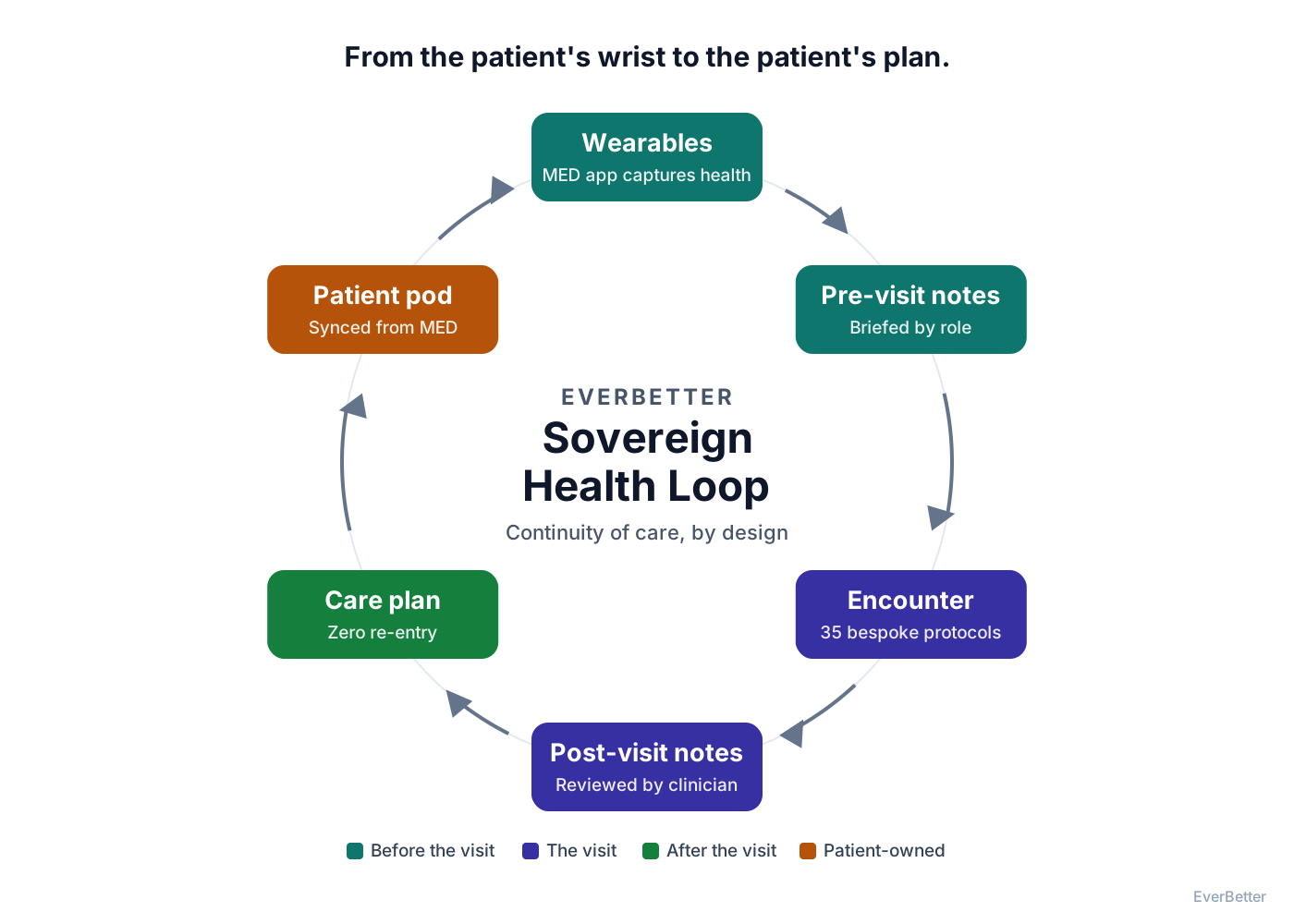
After the visit, the scribe drafts each output, and the clinician marks every extraction as reviewed, modified, or disapproved. Approved work flows to the chart and to the clinical staff handoff. The patient receives the care plan in their own record with zero re-entry. The MED app then syncs the plan to the patient’s own Solid pod, which means the plan travels with the patient.
We call it the EverBetter Sovereign Health Loop™. It is data inversion applied to the exam room. The patient owns the data, and the applications come to it. The scribe reads the wearable stream before the visit and writes the care plan back to the patient after it. The loop closes in the patient’s record, where it belongs.
Return to Maria. She walked in known and walked out with her plan. Between visits, the MED app keeps capturing her health, so her next visit begins where this one ended. Care becomes a line instead of a series of appointments. That line is continuity of care.
You provide care. EverBetter carries it forward.
Chris “Buzz” O’Neil is CTO of EverBetter.
[1] American Academy of Family Physicians, “Continuity of Care.” [Online]. Available: https://www.aafp.org/about/policies/continuity-of-care
[2] F. Pennic, “The ‘Platform’ Squeeze: Epic releases native AI charting, putting venture-backed scribes on notice,” HIT Consultant, Feb. 5, 2026. [Online]. Available: https://hitconsultant.net/2026/02/05/epic-releases-ai-charting-ambient-ai-market-implications/
1 thought on “Every Visit Counts: Care That Builds on Itself”